
Dr. Friedman’s Weight Loss Guide

GLP-1s and Compounded Options
Ozempic, Mounjaro, Wegovy, Zepbound
GLP-1 drugs and insurance approval
The marketing of the GLP-1 receptor agonists (GLP-1RA) for weight loss has revolutionized medicine and Dr. Friedman has been an earlier prescriber of these medicines. Because the demand has become so great, insurance companies have instituted policies to control their obligations to pay for these meds. Currently, most insurance companies will not cover this medication unless a patient has Type II diabetes. Patients are often confused by this, because they see so many people on social and traditional media, who have benefited from these drugs. But many of these patients are able to pay cash for these expensive meds, without having to ask their insurance plan for help.
Currently, Ozempic and Mounjaro are approved for diabetes and Wegovy and Zepbound are approved for obesity. However, insurance companies often have step therapy requirements, where you must fail other medicines before insurance will cover them. The coverage for obesity medicine is very subject to whether insurance covers obesity medicines in general that is employee-based, currently most do not cover these medicines. Coverage for PCOS, pre-diabetes, sleep apnea and heart disease, while these medicines are effective for these conditions, is unlikely to be approved.
When these drugs were introduced, companies tried to get doctors to prescribe these medicines and insurance companies initially paid for them. This is no longer the case. Additionally, in the past, some drug manufacturers have offered coupons for these meds, but they only last a few months and currently the cost even with a coupon is high. When the coupons expire or the drug that was covered is no longer covered, the patient then finds themselves without coverage. Those who rely on insurance to cover their GLP-1, unfortunately are subject to the restriction of proving they have Type II diabetes. It is true that these meds have proven also useful for those who have PCOS and pre-diabetes, and Medicare has just recently approved Wegovy for seniors with heart disease, but unfortunately, the insurance industry has not adjusted its policies yet to encompass these diagnoses in their approval guidelines. Dr. Friedman is hopeful that the FDA and insurance industry will catch up to the full benefits of these drugs, but for now, patients who rely on insurance must live under these rules.
Since Dr. Friedman started prescribing these meds, he has submitted, and received dozens of denials, if the patient does not have Type II diabetes or a high HbA1c (blood test showing diabetes). Very few patients are currently covered. For Dr. Friedman’s staff to prescribe these medicines, the patient needs to call up their insurance and find out exactly what the requirements for coverage are. An answer is that a pre-authorization is needed is not specific enough, they need to tell you what the requirements are and it is illegal if they do not. Only then will his staff prescribe the medicines and do the pre-authorization. His staff will not do appeals, as they are unlikely to be overturned. However as discussed below, compounding pharmacies are an excellent and safe alternative to GLP-1RAs prescribed at conventional pharmacies.
Dr. Friedman only prescribes these medicines to current patients and requires an appointment every 3 months for refills.
What is the difference between different GLP-1RA drugs?
Byetta was the first GLP-1RA approved by the FDA in 2005. It was based on Exendin-4, the GLP-1RA in the Gila monster lizard. It was a twice a day injection that often gave welts at the site of the injection. Semaglutide (brand name Ozempic, Wegovy, made by Novo Nordisk) took the structure of Exendin-4 and made it more long-lasting, so it could be given as a weekly shot. Ozempic was approved by the FDA for diabetes in 2017 and Wegovy was approved for obesity in 2021. Scientists then combined the glucose-dependent insulinotropic polypeptide (GIP) with a glucagon- like peptide-1 (GLP-1) receptor agonist to come up with Tirzepatide which is a “twincretin.” This drug, made by Lilly, was approved by the FDA for diabetes as Mounjaro in 2022 and Zepbound was approved for obesity in 2023. Tirzepatide has very impressive weight loss properties with patients on the highest dose losing up to 25 pounds. It often has less
side effects than semaglutide, especially less nausea, because it contains GIP, which helps secrete insulin when blood sugar is high. It is Dr. Friedman’s go to drug for weight loss, all things being equal. Because Tirzepatide it is more effective for weight loss than semaglutide, it is often more cost-effective.
Compounding Pharmacies that Compound GLP-1RAs
With the increasing demand for GLP-1RAs, high commercial cost and limited supply, compounded pharmacies started compounding these drugs for the patients at a fraction of the cost of brand-name drugs at commercial pharmacies. They were allowed to do this because the FDA deemed that there was a shortage of brand-name drugs, since they were compounding Tirzepatide and Semaglutide and not the brand-names Ozempic, Wegovy, Mounjaro and Zepbound, and because they were able to supply in-between dose or added ingredients such as Glycine + B12. However, in October 2024, the FDA under influence from Lilly declared the shortage of Mounjaro and Zepbound “resolved” and told compounding pharmacies to stop distributing compounded versions of these drugs. However, the shortage of Mounjaro and Zepbound was not over and there is legal action between compounding pharmacies and the FDA. The FDA announced later in October 2024 that compounding pharmacies can continue making Tirzepatide while the FDA reconsiders its decision to remove the drug from its shortage list. Dr. Friedman agrees that compounding pharmacies are supplying a helpful service to patients and should continue to supply these medicines. Although he cannot predict the future, Dr. Friedman expects compounding pharmacies to continue to supply these drugs and expand their use as providers realize these are good options for patients. Dr. Friedman posits that Lilly pressured the FDA to say the shortage was over purely for profit making reasons.
Individual Dosing
Another advantage of GLP-1RAs from compounding pharmacies over brand name products is that compounding pharmacies prescribed vials and syringes, so the dose can be individualized, while Wegovy, Zepbound and Mounjaro come as single-use, fixed-dose cartridges. Ozempic is designed for multiple fixed-dose delivery, but by using “clicks” patients can give individualized dosing. In contrast, compounding Semaglutide and Tirzepatide can be given in whatever dose the patient and doctor decide on. Patients can start on a very low dose (micro-dosing) and work their way up, so side effects are minimized. Patients have the leeway to adjust their own dose depending on appetite suppression and side effects, as well as costs. This is a major advantage of the compounded drugs.
Are Compounding Pharmacies safe?
First it depends on the compounding pharmacy. Dr. Friedman has researched compounding pharmacies across the country and has found a few that he trusts to make a safe product. He does not recommend random compounding pharmacies on the internet or using companies that have virtual doctors prescribing these medicines to patients at a profit without having a doctor-patient relationship. Dr. Friedman only recommends compounding pharmacies that are Accredited by the Pharmacy Compounding Accreditation Board (PCAB). At the compounding pharmacies below, each batch is tested for sterility and potency by a 3rd party independent laboratory and provides a Certificate of Analysis.
Second, these medicines, even brand name versions, have side effects. While nausea, decreased appetite, and constipation are common for both brand name and compounded pharmacies, more serious side effects including pancreatitis and bowel obstruction can also occur with both sources. As these drugs are widely prescribed, the number of these anecdotal side effects may seem large, but as a percentage they are low. Dr. Friedman has not seen data that the side effects are more common among compounded pharmacies than brand-name pharmacies. In fact, side effects are likely less with compounded versions due to the ability to give individualized dosing.
Both compounding pharmacies and pharmaceutics batch process their drugs using sterile conditions. While Novo Nordisk and Lilly have spent millions on their production plants and certainly make sure their products are of high quality, Dr. Friedman is not convinced that compounded products are inferior.
Which Compounding pharmacies does Dr. Friedman use for GLP-1RAs?
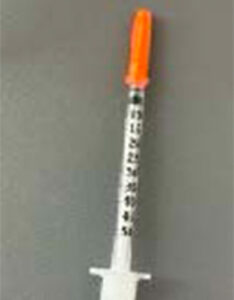
Because of their excellent service and reliability and ability to ship both semaglutide and tirzepatide to 45 states, Dr. Friedman’s go to compounding pharmacy is University Compounding Pharmacy (UCP) which is a 503A pharmacy. Dr. Friedman has used this pharmacy based in San Diego for decades. Their price is reasonable, and they can ship multiple vials with each order. They ship to all states except Alabama, Arkansas, Iowa, Mississippi, North Carolina, and Washington DC. Prescribing is easy and after Dr. Friedman prescribes your medicine, they contact you for shipping and billing information (patients pay them directly). The vials plus free syringes and alcohol pads arrive refrigerated in 2-3 days. The price for Tirzepatide Injectable 20 mg/mL (1 mL vial) is $200 plus shipping (usually $25 per shipment) for 1 vial, $325 for 2 vials, $450 for 3 vials. Depending on the dose, each vial typically last 2 months. As most of Dr. Friedman’s patients have gained weight from their Endocrine issue, before they saw Dr. Friedman, most patients want to take advantage of this relatively low-cost option. Dr. Friedman recommends starting with one vial to make sure you tolerate it and then we can prescribe you more vials after you are ready for refills. A vial of Tirzepatide and syringe are shown below.
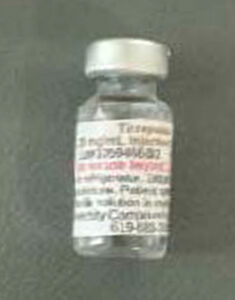 .
. 
UCP also has Semaglutide (TWO) with Cyanocobalamin (B12) 2 mg-0.4 mg/mL #1 mL (2 mg of Semaglutide /vial) – Price $199 and Semaglutide (FIVE) / Cyanocobalamin (B12) 5 mg-0.4 mg/mL #2 mL (10 mg of Semaglutide /vial) – Price $299
|
UCP |
How to order |
Mg per vial |
Typical Dosing Regimen recommend by Dr. Friedman |
Theoretical doses per vial* |
Cost per vial* |
State |
|
Tirzepatide |
20 mg/mL |
20 mg |
2 mg (0.1mL) weekly for 4 weeks, then 4 mg weekly until your next appointment |
7 |
$200 |
44 states including CA |
|
Semaglutide/ B12 TWO |
2 mg-0.4 mg/mL #1 mL |
2 mg |
0.25 mg weekly for 4 weeks, then 0.5 mg weekly for 2 weeks, then go to 5 mg vial |
6 |
$199 |
44 states including CA |
|
Semaglutide/ B12 FIVE |
5 mg-0.4 mg/mL #2 mL |
5 mg |
0.25 mg weekly for 4 weeks, then 0.5 mg weekly for 4 weeks, then 1 mg weekly for 2weeks |
10 |
$299 |
44 states including CA |
*Based on typical dosing; shipping charges are extra (usually $25 per shipment).
Strive Pharmacy Strive Pharmacy, which compounds Semaglutide (brand name Ozempic, Wegovy), and Tirzepatide (brand name Mounjaro, Zepbound) is a 503B compounding pharmacy that offers GLP-1RAs to patients at a low price in 31 states including California. For Strive pharmacy, patients pay Dr. Friedman directly. There are 3 options available at Strive Pharmacy, as seen in this table:
|
Strive |
How to order |
Mg per vial |
Use for which dose |
Theoretical doses per vial* |
Cost per vial* |
State |
|
Semaglutide# |
2.5 mg/ml – 2 ml vial |
5 mg |
0.25 mg weekly for 4 weeks, then .5 mg weekly for 4 weeks, then 1 mg weekly for 2 weeks |
10 |
$299 |
CA |
|
Semaglutide/Glycine/B12 |
5mg/5mg/1mg/mL 2 ml vial |
10 mg |
0.25 mg weekly for 4 weeks, then 0.5 mg weekly for 4 weeks, then 1 mg weekly for 7 weeks |
15 |
$299 |
Out of CA |
|
Tirzepatide/Glycine/B12 |
10mg/5mg/500mc g/mL 2 ml vial |
20 mg |
2.5 mg weekly for 4 weeks, then 5 mg weekly for 2 weeks |
6 |
$299 |
Out of CA |
*Based on typical dosing; shipping charges are included. Dr. Friedman will ask the patient for a PayPal payment of $299 with instructions to submit the PayPal receipt, state of residence, preferred drug and number of vials. Please refer to the Strive FAQ sheet. His office will then order one vial of these medicines, unless the patient wants more than one vial. Dr. Friedman recommends staying with a given pharmacy if you are pleased with the product. For patients in Alabama, Arkansas and North Carolina that are not supplied by UCP or Strive, Dr. Friedman uses Empower compounding pharmacy. For patients on Semaglutide, this is a low cost option regardless of state. Patients pay Empower directly.
|
Empower* product |
How to order |
Mg per vial |
Use for which dose |
Theoretical doses per vial |
Cost per vial** |
|
Semaglutide / Cyanocobalamin |
1/0.5 mg/mL 1 mL Vial |
1 mg |
0.25 mg weekly |
4 |
86.63 |
|
Semaglutide / Cyanocobalamin |
1/0.5 mg/mL 2.5 mL Vial |
2.5 mg |
0.5 mg weekly |
5 |
114.48 |
|
Semaglutide / Cyanocobalamin |
5/0.5 mg/mL 1 mL Vial |
5 mg |
1 mg weekly |
5 |
150.06 |
|
Semaglutide / Cyanocobalamin |
5/0.5 mg/mL 2.5 mL Vial |
12.5 mg |
2mg weekly 2.4 mg weekly |
6 5 |
230.50 |
|
Tirzepatide / Niacinamide |
8/2 mg/mL 2.5 mL Vial |
20 mg |
2.5 mg weekly 5 mg weekly |
8 4 |
242 |
|
Tirzepatide / Niacinamide |
17/2 mg/mL 2 mL Vial |
34 mg |
7.5 mg 10 mg |
4 3 |
476 |
|
Tirzepatide / Niacinamide |
17/2 mg/mL 4 mL Vial |
68 mg |
10 mg 12.5 mg 15 mg |
6 5 4 |
698 |
** Plus overnight shipping charges of $41
How long are the compounded vials good for?
Officially, the CDC recommends most multidose vial be discarded 28 days from first puncture. However, UCP has performed potency, stability, and sterility testing which allows them to guarantee the medication unopened for 50 days and is doing testing that confirms that. Dr. Friedman recommends that refrigerated unopened vials can be used for a year and refrigerated open vials can be kept for 90 days. Please let us know which dose you want and how many vials.
What dose does Dr. Friedman recommend? How much is a unit?
For weight loss, Dr. Friedman recommends the lowest dose that gives appetite suppression and does not give side effects. To avoid side effects, Dr. Friedman recommends a slow increase in the dose. For Tirzepatide from UCP, Dr. Friedman recommends starting at 2 mg (0.1 mL=10 units) weekly for a month, then 4 mg (0.2 mL=20 units) weekly for a month, then 6 mg (0.3 mL=30 units) for the next month. Patients with a history of side effects to GLP-1RA or concern about dosing can start at 1 mg (0.05 mL= 5 units) and those who have been on GLP-1RA before can start at a higher dose such as 5 mg (0.25 mL=25 units). If patients have been off GLP-1RA for more than a month, Dr. Friedman recommends starting back at a lower dose. If off for less than a month, the same dose can be restarted. The maximum dose of Tirzepatide is 15 mg a week, however the cost is greater at that dose. Some patients continue to lose weight on a low dose, while others need to keep increasing the dose.
For Semaglutide, Dr. Friedman also recommends the lowest dose possible with a gradual increase in dosing. The maximum dose is 2.4 mg/week, but the cost goes up with higher doses. A typical dosing regimen is
0.25 mg weekly for 4 weeks, then 0.5 mg weekly for 4 weeks, then 1 mg weekly for 4 weeks and then increase to 2 mg weekly depending on budget.
Dr. Friedman recommends Tirzepatide over Semaglutide, with patients on Semaglutide switching to Tirzepatide if they get side effect or stop losing weights. Occasionally, some patients do better on Semaglutide than Tirzepatide.
A unit is the markings on the syringe. 10 units equal 0.1 mLs.
If you are taking GLP-1RAs for diabetes, please discuss dosing at your appointment.
Is B12 helpful?
B12 and glycine are added by compounding pharmacies to reduce the reduce nausea and to be able to distinguish themselves from conventional pharmacies. Studies in mice presented at the 2024 ADA meeting attended by Dr. Friedman suggest that it decreases the weight loss effects. Some patients have allergies or otherwise don’t want B12.
Side effects of Tirzepatide and Semaglutide
The most common side effects for both drugs include nausea and constipation. Patients also report acid reflux, fatigue, stomach pain, vomiting, burping and diarrhea. Depression and anxiety often improve, but can worsen. Muscle loss can occur, and Dr. Friedman recommends increasing protein intake (plant-based protein, if possible). The side effect of nausea is less common with Tirzepatide and can be minimized with both drugs by eating small meals and drinking a lot of fluid. Dr. Friedman can prescribe Zofran for nausea if needed. Both drugs should not be used if the patient or any family members have been diagnosed with Multiple Endocrine Neoplasia Syndrome Type 2 or Medullary thyroid cancer. Other types of thyroid cancer are okay.
Other weight loss medications.
GLP-1RAs have supplanted other older weight loss medicines, but Dr. Friedman still recommends two older medicines in those that can’t tolerate GLP-1RAs.
Phentermine (brand names Adipex-P, Lomaira (8 mg) and Suprenza 15, 30, 37.5 mg) has been around for over 50 years is FDA approved for short-term but not for long-term weight loss. Phentermine was part of the Fen-Phen combination that was quite popular about 20 years ago. Fenfluramine, the drug that is abbreviated Fen, was pulled from the market in 1997 due to valve and lung problems. However, the Phentermine, which is the Phen drug, has remained in use and is actually a quite-effective weight loss medicine. Phentermine works by decreasing appetite and also may have some effects on increased metabolism and is in the family of amphetamine-like drugs. Therefore, the side effects of Phentermine include feeling hyper or jittery, rapid heartbeat, increased blood pressure, and trouble sleeping, so it should not be given at night. The drug works quite well short-term in reducing food intake and can often be given before lunch and dinner. The tablets are 37.5 mg in dose and therefore, Dr. Friedman often gives 1/2 tablet before lunch and dinner. In some patients, this keeps them awake at night and therefore, Dr. Friedman may
give them a full pill to take in the morning. However, as the drug is only FDA approved for short-term use, Dr. Friedman usually gives this for a period of 2 to 6 months.
Phendimetrazine tartrate is a sympathomimetic amine, which is similar to an amphetamine, used as a short-term supplement to diet and exercise in the treatment of obesity. Phendimetrazine is available in tablets and capsules. The standard immediate-release form is labeled as PDM, a reference to the active ingredient phendimetrazine. It is a 35 mg tablet most often prescribed for use two to three times per day, to be taken orally 30-60 minutes before each meal. The sustained-release formula (Bontril SR) is taken as a single dose of one 105 mg tablet taken 30-60 minutes before the morning meal each day. Both are good choices, especially in patients who were on phentermine and then it stopped working.
These medicines can be taken with GLP-1RA in certain circumstances. Please discuss with Dr. Friedman at your appointment.
Dr. Friedman no longer recommends other medicines such as Qsymia, metformin, orlistat, Contrave, Victoza, Saxenda, Rybelsius, Trulicity and Belviq (lorcaserin) that was removed from the market in 2020.
Goodhormonehealth Webinars
Patients should listen Dr. Friedman’s GoodHormoneHealth Webinar on November 17, 2024 on
compounded Tirzepatide vs Semaglutide for patients with endocrine problems https://www.youtube.com/watch?v=u9VbPDsJcPE https://www.facebook.com/goodhormonehealth https://www.goodhormonehealth.com/webinars
or listen to his Podcast on your favorite Podcast channels.
Please visit https://www.goodhormonehealth.com/weight-loss/ for more information. We look forward to having compounded GLP-1s help you achieve good hormone health.